If you’ve ever watched a thriller about a high-stakes government operation, you’ve probably seen scenes of secret, secure locations where witnesses are hidden, intelligence is processed, or threats are neutralized. For years, the narrative around these spaces has been tightly tied to state-run facilities—those operated by federal law enforcement, intelligence agencies, or emergency response teams. But over the past decade, a quiet shift has been underway: more and more government agencies are turning to private safe house systems to meet their unique security needs. As a supplier of these systems, I’ve seen firsthand how this partnership works, how it addresses gaps in traditional government infrastructure, and why it’s become a critical tool for agencies tasked with protecting people and national security.
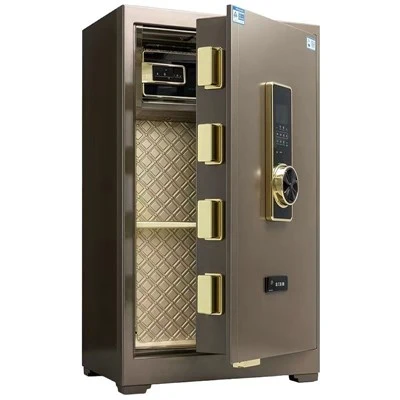
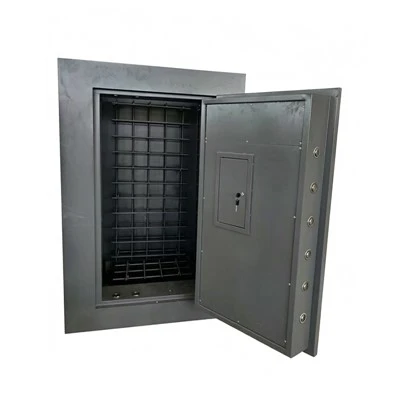
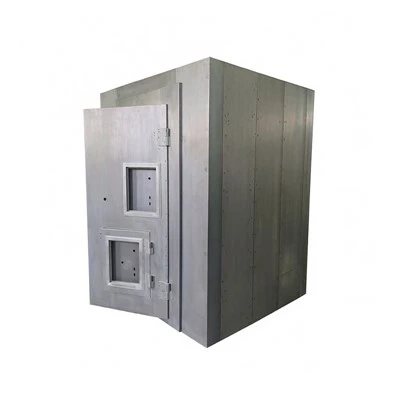
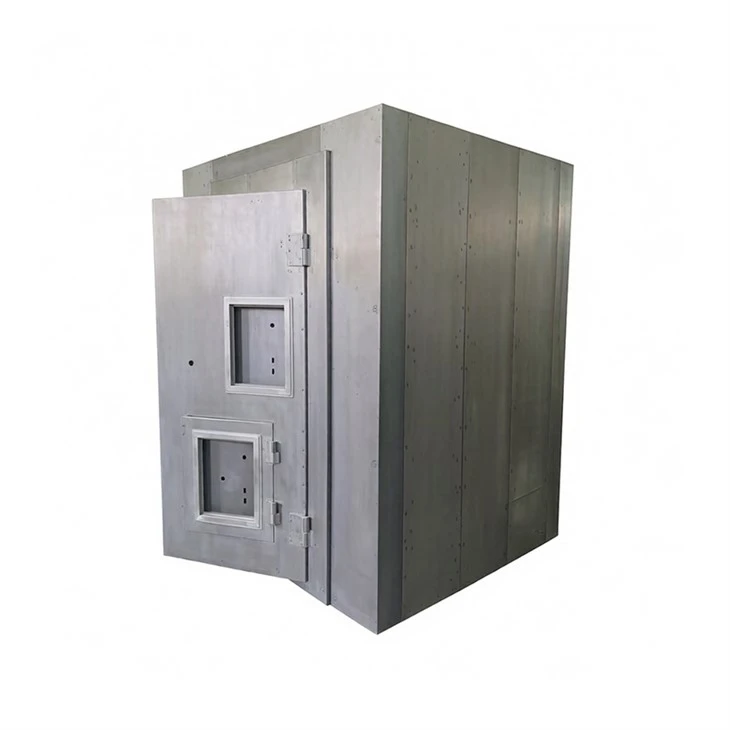
To start, it’s important to clarify what a private safe house system actually is, because there’s a lot of misinformation out there. Unlike generic safe houses that might just be a hidden house in the woods, a purpose-built private safe house system is a tailored, integrated security solution designed for specific use cases. For residential settings, that might mean a reinforced, self-contained space within an existing home equipped with blast-resistant walls, two-way communication tools, air filtration systems, and fail-safe access controls. For larger properties like luxury villas, it could expand to include perimeter monitoring, secure entry points, and modular design that blends seamlessly with the surrounding architecture. We’ve even developed solutions for government offices, data centers, and temporary operational sites—spaces that need to be both secure and unnoticeable to the general public. To give you a concrete example, our Residential Safe Room is designed to withstand forced entry, chemical and biological threats, and even extreme weather, with the added benefit of being disguised as a standard home office or storage area, so it doesn’t draw unwanted attention. Similarly, our Villa Safe Room is built for high-net-worth individuals and organizations that need extended secure space, with features like remote monitoring and redundant power supplies that ensure it’s operational around the clock.
Now, the big question: why would a government agency—with seemingly unlimited resources to build and operate its own secure facilities—turn to a private supplier? The answer boils down to three key factors: flexibility, scalability, and operational secrecy. Let’s break each one down. First, government agencies often operate on rigid, multi-year procurement cycles, and their facilities are frequently tied to fixed locations. But many missions require short-term, temporary secure spaces that can be deployed quickly and relocated if needed. For example, a federal task force investigating a local organized crime ring might need a secure meeting space for witnesses or undercover agents, and building a permanent government facility in that neighborhood would take months and draw unwanted attention from the very group they’re investigating. A private safe house system can be installed in days, customized to fit a specific location, and decommissioned just as quickly once the mission is over. This level of agility is almost impossible to achieve with public sector construction projects, which are bogged down by red tape, public scrutiny, and strict regulatory requirements.
Second, private safe house systems offer a level of scalability that outpaces government infrastructure. When an agency faces a sudden surge in demand for secure space—say, during a natural disaster when emergency responders need a command center, or during a high-profile trial that requires witness protection—they need to scale up their capacity fast. Building new government facilities from scratch takes time, but private suppliers can deploy pre-built, modular safe house systems to multiple locations in a matter of weeks. This was especially evident during the COVID-19 pandemic, when several state health agencies partnered with private safe house providers to set up secure, isolated facilities for healthcare workers treating highly contagious patients, and for individuals who needed to quarantine in a safe, controlled space. These facilities were not only faster to deploy than building new hospitals or using existing government buildings, but they also came with built-in security features that prevented unauthorized access—something that was critical when medical resources were scarce and vulnerable to theft.
Third, and perhaps most importantly, private safe house systems help protect operational secrecy. Government facilities are inherently public in a way—they’re subject to inspections, audits, and public records requests, and their locations are often documented in official reports or on public property records. For agencies dealing with covert operations, witness protection, or counter-terrorism missions, this is a major risk. If a safe house’s location is known or can be traced, it puts everyone inside in danger, and it compromises the entire mission. Private safe house systems, on the other hand, can be integrated into non-government properties—residences, villas, commercial buildings—whose ownership and use are not tied to official government records. This means their locations are much harder to trace, and the facilities can be easily disguised as ordinary spaces, so they don’t attract the attention of criminals, foreign agents, or the media. As someone who’s worked with multiple federal, state, and local agencies over the past 12 years, I can tell you that secrecy is one of the biggest priorities for these organizations, and private safe house systems are a key tool in that regard.
Of course, some critics argue that using private safe house systems raises ethical or security concerns—like the risk of private vendors compromising operational integrity, or the potential for unequal access to secure resources. It’s true that any partnership between government and private industry comes with responsibility, and reputable suppliers like ours work closely with agencies to meet strict security standards, including those set by the Department of Homeland Security and the National Institute of Justice. We don’t just sell equipment; we work with agencies to design solutions that are tailored to their specific needs, and we provide ongoing training and support to ensure that the systems are used correctly. We also adhere to strict non-disclosure agreements, and we never disclose details about our government clients or their missions, so operational secrecy is never compromised.
Another common misconception is that private safe house systems are only for high-level government operations. In reality, we work with a wide range of agencies, from local police departments setting up secure evidence storage, to county emergency management teams needing secure command centers during hurricanes, to federal agencies like the Department of Justice and the Federal Bureau of Investigation that use our systems for witness protection and undercover operations. We even work with military units that need temporary secure spaces during training exercises or overseas deployments. Each of these use cases requires a different set of features, which is why we focus on customization rather than one-size-fits-all solutions. For example, a small local police department might need a compact, easy-to-install safe room for storing sensitive evidence, which can be integrated into the back of a police station. A federal agency might need a larger, more complex system with multiple access points and advanced communication tools for a witness protection safe house.
One of the most rewarding aspects of my work is seeing how these systems make a tangible difference in protecting people. A few years ago, we partnered with a state witness protection program to upgrade their existing safe house facilities. They had a small home that was being used to relocate a witness in a high-profile gang trial, but the existing security features were outdated and couldn’t withstand a forced entry. We installed a custom Residential Safe Room that was reinforced with steel beams, blast-resistant drywall, and a state-of-the-art access control system, and we also added a perimeter monitoring system that alerted the program to any unusual activity. A few months later, the witness was targeted by a group of gang members who tried to break into the safe house. Thanks to the reinforced safe room and the monitoring system, the program was able to respond quickly and safely, and the witness was able to testify, resulting in convictions that put multiple dangerous criminals behind bars. That’s the impact that private safe house systems can have—they don’t just provide security; they enable critical operations that protect communities and uphold the rule of law.
As we look ahead, the demand for private safe house systems in government is only going to grow. Threats are evolving rapidly, from cyberattacks on government facilities to increasing targeted violence against public officials and witnesses, and agencies need flexible, scalable, and secure solutions that can keep up. At the same time, government budgets are tighter than ever, and private safe house systems often offer a more cost-effective alternative to building and operating permanent government facilities—especially for short-term or temporary missions. Instead of spending millions of dollars on a permanent facility that might only be used a few times a year, agencies can rent or deploy private safe house systems on an as-needed basis, which helps stretch limited resources further.
If you’re a government agency looking for a secure, reliable safe house solution, we’d welcome the chance to discuss your specific needs. Whether you need a compact residential safe room for witness protection, a larger villa safe room for a high-level executive detail, or a custom system for a command center or evidence storage, we work closely with agencies to design solutions that meet the highest security standards and fit within your budget. Our team has years of experience working with federal, state, and local agencies, and we understand the unique challenges that government organizations face when it comes to security, secrecy, and operational flexibility. We’re committed to providing solutions that not only protect people and information, but also help agencies fulfill their critical missions.

Don’t hesitate to reach out to start a conversation about how our private safe house systems can support your agency’s security needs. We’re here to answer your questions, provide more details about our products and services, and work with you to find the right solution for your specific use case.
References
U.S. Department of Homeland Security. (2021). Private Sector Security Guidelines for Critical Infrastructure. Retrieved from dhs.gov/critical-infrastructure/guidelines
National Institute of Justice. (2022). Secure Facilities for Law Enforcement Operations: Best Practices. Retrieved from nij.ojp.gov/publications
Federal Bureau of Investigation. (2020). Witness Protection Program: Security Protocols and Partnerships. Retrieved from fbi.gov/programs/witness-protection