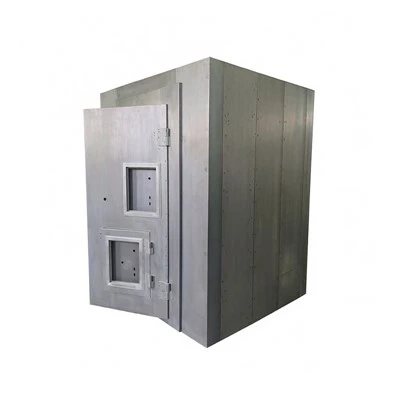
Can a fireproof security safe protect from theft as well as fire? That’s a question I hear every single day—from small business owners tucking cash and client records into back offices, to families storing birth certificates and heirlooms in home closets, to artists guarding original sketches in studio spaces. As a fireproof security safe supplier, I’ve spent years fielding this exact concern because it’s not a yes-or-no answer; it ties together material science, lock design, real-world criminal behavior, and the unplanned disasters that can strike when you least expect them. Let me break this down the way I do with every customer who walks through our virtual door or picks up the phone: there’s no one-size-fits-all, but when a safe is engineered right, it can do both jobs exceptionally well—if you understand what to look for.
First, let’s settle on what a “fireproof safe” actually is, because a lot of companies slap that label on cheap metal boxes that can’t survive so much as a stovetop grease fire. Real fire resistance isn’t just about being made of thick steel; it’s about the insulation inside. Most certified fireproof safes use a core of ceramic fiber, vermiculite, or perlite—materials that expand when heated to seal gaps and slow heat transfer, keeping the interior at a safe temperature (usually under 350°F, the threshold for most paper and electronic media) for a set amount of time. I tested this last winter with a batch of our mid-tier commercial units: we set one in a controlled burn oven, cranked the heat to 1,700°F (the temperature of a typical house fire), and pulled it out after 90 minutes. The digital display inside—even a cheap calculator we left tucked in a drawer—still worked. That’s the fire side. But here’s the catch: all that fire-resistant material doesn’t do a thing if a thief can yank the safe off its shelf, pry it open with a crowbar, or just carry it away to crack later in a garage or basement. So theft protection is a whole separate set of standards, built into the safe’s body and locking mechanism.
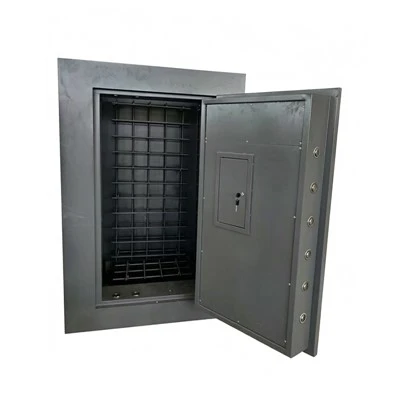
Let’s talk theft first, because that’s the part most people overlook when they focus only on fire. The No. 1 mistake I see is someone buying a cheap fireproof box from a big-box store, thinking it will stop a thief. Those boxes are often made of 16-gauge steel (think the thickness of a soda can) with thin, plastic-lined insulation. A determined amateur with a crowbar can pop the door in 10 seconds, and a professional burglar with a pry bar or bolt cutters will be in and out in less than a minute. Real theft-resistant safes—especially the ones we sell for commercial or high-value residential use—have thicker steel: 12-gauge is the minimum we recommend for light theft risk, and 10-gauge or heavier for businesses storing cash or high-value documents. We test every safe’s door and body for pry resistance; when a customer looks at our Commercial Security Safe, the first thing I point them to is the bolt system: most of our models have 1-inch solid steel bolts that extend deep into the safe’s frame, so even if someone pries at the door, the bolts won’t bend or pull out.
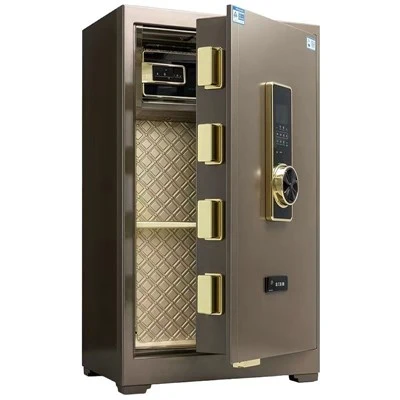
Lock design is equally critical for theft protection. There are two main types here, and both have pros depending on who’s using the safe. Mechanical combination safes, for example, have been around for decades—no batteries, no electronics to short out during a fire, and they’re nearly impossible to pick. I still have a customer who’s had his mechanical combination safe for 22 years; he told me a guy tried to break in once, and after 15 minutes of twisting the dial and prying, the thief just gave up and moved to the next office. That’s the kind of theft resistance that holds up, which is why I always recommend our Mechanical Combination Safe for anyone who wants a no-fuss, long-lasting lock. On the flip side, electronic lock boxes are popular for homes and small businesses because you can program multiple access codes and get alerts if someone tries the wrong code multiple times. Our Electronic Safe Box models are tested to resist lock picking, and their steel cases are thick enough that a thief would need specialized tools to get in—tools most amateur burglars don’t carry. For even higher security, we have Fingerprint Security Safe units that use biometric scanning; they’re fast to access, and no one can get in without your unique fingerprint, which is a huge plus if you’re worried about employees or family members misusing access.
But wait—what about situations where both fire and theft hit at the same time? That’s when most off-the-shelf fire safes fail. Let’s say you run a small law office downtown, and a burglar breaks in during the night, knocks over a space heater that starts a fire, and then flees before the fire department arrives. If your safe is only fireproof, the heat will get through as the insulation breaks down, but if it’s only theft-resistant, the burglar will pry it open and take your client files. The safes we build are engineered to handle both: the steel body and bolt system resist prying and carrying, and the insulation core keeps the interior cool during a fire. We recently had a customer in Houston who went through Hurricane Ida a few years back—his office flooded, a falling power line started a small fire in his back room, and the safe he bought from us sat through both. His documents and server hard drive were untouched, and the thief who tried to break in? He couldn’t get past the 1-inch bolts. That’s the sweet spot.
Of course, no safe is 100% theft-proof, right? Even the most expensive safe can be carried away if it’s not anchored to the floor or wall. That’s a simple step I walk every customer through, regardless of which safe they buy. All our safes come with pre-drilled mounting holes and anchor bolts, and I advise anyone to bolt them to a concrete floor or a load-bearing wall—if a safe is glued to the floor with 1000 pounds of force, a thief can’t just pick it up and carry it to their van. I also tell customers to avoid hiding the safe in obvious spots like a closet under stairs; if a thief is casing your home or office, they know all the common hiding places. A fireproof safe is only as good as its setup, no matter how well it’s made.
Another common question I get: what about water? Wait, how does water tie into this? Because a lot of people don’t realize that fire damage and water damage often go hand in hand. Firefighters use hundreds of gallons of water to put out a house fire, and that water can soak documents, electronics, and even steel safes. That’s why we also offer Waterproof Security Safe models; their insulation is treated to resist water absorption, so even if a fire hose sprays them for hours, the inside stays dry. I’ve seen a customer’s safe that was in a garage that flooded during a storm—water was up to the top of the safe, and when we pried it open a week later, his birth certificate and photos were still dry. That’s a bonus layer of protection that pairs perfectly with fire and theft resistance.
Let’s get into the science to back this up, because I don’t want to just talk theory—this is based on testing standards. The Underwriters Laboratories (UL) has two main certifications for safes: UL 72 for fire resistance, and UL 1037 for theft resistance. A safe that has both UL 72 and UL 1037 is the only one you can trust to protect against both fire and theft. Here’s what that means in plain terms: UL 72 requires the safe to stay under 350°F for 2 hours in a fire test, and UL 1037 means it can withstand 10 minutes of continuous prying, drilling, and attacking with common tools like crowbars and sledgehammers. Most cheap fire safes only have UL 72 certification and no theft rating, and most cheap theft safes are made with thin steel that fails fire tests in 20 minutes. Our entire line of safes meets or exceeds both standards, which is why we stand behind them.
I want to be honest here—there are limits. A safe can’t stop a professional team with heavy industrial tools, like a torch or a hydraulic jack, but that’s not a realistic threat for most people. The FBI’s 2022 Uniform Crime Reporting Program says 70% of burglaries are committed by amateurs, and they use simple tools like crowbars and screwdrivers. For that kind of threat, a certified fire-theft safe is more than enough. And for fire, most home and office fires are put out in under 30 minutes, so even a 1-hour fire rating is sufficient for most needs. If you have something extremely valuable, like a master’s thesis or a rare collection, you can get safes with 4-hour fire ratings, but that’s overkill for most small business owners or families.
Let’s talk about real customer examples, because that’s what matters most. Last year, a customer who owns a small bakery in Chicago came to me panicking—his store had a break-in the month before, and the thief had stolen all his daily cash and the backup copies of his inventory records, which meant he had to close for 2 days to rebuild everything. He wanted a safe that would keep his cash from being stolen and his inventory records from being destroyed if there was a fire. We recommended one of our commercial units with a mechanical combination lock and anchor kit. A month later, he texted me a photo of his safe with a dent in the side—he said someone tried to break in a second time, but the crowbar left a dent and nothing else. A week after that, there was a small grease fire in his kitchen; the fire department put it out quickly, and the safe’s interior was at 90°F when he checked, which was way under the 350°F limit for paper. That’s exactly the kind of protection we design for.
Another example: a teacher I worked with who stores student records and test answer keys in her classroom. She was worried about two things: someone stealing the keys (which would compromise the whole school’s testing process) and a fire in the classroom from a space heater. We sold her our electronic safe box with a fingerprint lock—she can access it in seconds during class, and if someone tries to guess the wrong code, it locks for 10 minutes. Last semester, a student who was struggling with math tried to pry the safe open to get the answer key, but he couldn’t, and the safe stayed intact when a small candle he’d lit for a science project caught a desk on fire. She told me it saved her job that day, because she had all the test records safe and no one could steal the answer key.
Now, if you’re wondering which safe is right for you, it comes down to your specific needs. If you run a small business handling cash or sensitive documents, our Commercial Security Safe is a great choice—it balances fire resistance, theft protection, and space for larger items. If you want fast, keyless access for your home, the Fingerprint Security Safe or Electronic Safe Box are perfect. If you’re in an area prone to floods in addition to fires and theft, the Waterproof Security Safe will give you that extra layer of protection. And if you prefer the reliability of a lock that never needs batteries, the Mechanical Combination Safe is tried and true. I always advise customers to look for UL certification, not just the “fireproof” label, and to make sure their safe is anchored—those two steps are non-negotiable for long-term protection.
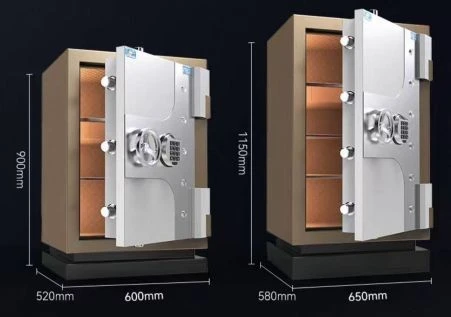

I’ll be clear: a cheap, uncertified fire safe will only protect your items from fire, not theft. A cheap, uncertified theft safe will only protect against thieves, not fire. But a certified fireproof security safe that’s built with thick steel, a reliable lock, and paired with proper installation will do both jobs well. It’s not magic—it’s material science, rigorous testing, and attention to the small details that make all the difference.
If you’re ready to pick a safe that fits your needs, or you have more questions about which option is right for you, reach out to our team to discuss the best solution for your space and valuables.
References
- Underwriters Laboratories. (2023). Standard for Security Safes (UL 1037). Retrieved from UL Product iQ Database
- Underwriters Laboratories. (2023). Standard for Antitheft Alarms and Signaling Devices (UL 72). Retrieved from UL Product iQ Database
- Federal Bureau of Investigation. (2022). Uniform Crime Reporting Program: 2022 Property Crime Statistics. Retrieved from FBI UCR Public Data Portal
- National Fire Protection Association. (2021). U.S. Home Structure Fires: 2015-2019 Report. Retrieved from NFPA.org