As a narrow filing cabinet supplier, I’ve spent thousands of hours talking to small business owners, remote workers, and office managers struggling with the same tight space puzzle: when every inch of your workspace counts, picking the right filing cabinet feels like picking between a smart phone and a desktop computer—both work, but only one fits your exact needs. Lately, the most common question I get is this: should you go for a 2-drawer or a 3-drawer narrow filing cabinet? I’ve watched customers second-guess this choice so many times that I decided to break down the decision into parts that actually matter—no sales fluff, just real, practical details.
First, let’s ground this in why narrow filing cabinets exist in the first place. Most standard filing cabinets are 28 to 30 inches wide, which is way too much for home offices tucked between a bed and a bookshelf, or store backrooms where aisles are barely 3 feet across. Narrow models—we’re talking 15 to 20 inches wide—solve that problem by fitting into spots a regular cabinet never could. But with that slim footprint comes a trade-off: you don’t get unlimited space. So 2 vs. 3 drawers isn’t just a number game; it’s about matching what you store, where you put it, and how you move through your space.
Let’s start with the 2-drawer narrow filing cabinet, which is the workhorse for casual, low-volume filing. When a customer comes in saying they only need to store a few years of personal tax docs, client invoices, or project notes that they’ll use once a month, the 2-drawer is almost always the first pick. Here’s what makes it worth considering: most 2-drawer narrow cabinets are around 26 to 28 inches tall, which means they fit under a standard desk—something the 3-drawer models usually can’t do. If you’re setting up a home office where every surface needs to pull double duty, being able to tuck your filing cabinet right under your writing desk or L-shaped desk corner is a game-changer. I had a customer last month, a freelance graphic designer in a 500-square-foot studio, who told me her only available spot for a filing cabinet was the gap between her desk and her bookcase. The 2-drawer fit perfectly, while the 3-drawer would have stuck out an extra 8 inches and made her tiny workspace feel even cramped. That’s the kind of real, on-the-floor use you don’t see in product specs.
But the 2-drawer has limits. If you’re a small business with a team of 3 or 4 people, or a remote worker who keeps every invoice, contract, and employee record for 7 years, two drawers won’t cut it. Most 2-drawer narrow cabinets have a total filing capacity of around 10 to 15 standard letter-sized folders. That’s enough for a few years of personal stuff, but if you’re managing client files for a marketing agency, that adds up fast. I once heard an office manager at a 6-person boutique café complain that she was using three 2-drawer cabinets because each only held the orders for one month, and she was out of closet space. Before she realized a 3-drawer could hold three months of orders, she was cluttering her storage area with extra units that doubled her costs.
Now, the 3-drawer narrow filing cabinet—this is the sweet spot for most people who aren’t just storing random papers. At around 36 inches tall, it’s still narrow enough to fit through most standard doorways (we’ve had customers take them up spiral stairs and into walk-in closets, which is a big plus) and holds roughly 20 to 25 standard letter folders. That’s enough space for a full year of client files, a small team’s HR docs, or a home office’s tax history plus project binders. But the 3-drawer also has a practical edge that many people overlook: the way it splits storage. Most 3-drawer narrow cabinets have equal (or slightly varying) drawer sizes, so you can dedicate one drawer to active, weekly-use files, another to semi-annual records, and a third to long-term archives. That organization alone saves so much time—you don’t have to dig through a pile of folders to find last month’s invoice, because it’s in its own labeled drawer.
That said, the 3-drawer isn’t for everyone. If you have a really tiny space—a 4x6 home office nook, a store backroom with only a 16-inch wide gap, or even a desk that’s only 24 inches deep—the extra 6 inches of height on a 3-drawer might not be worth it. I had a customer who worked out of her car’s backseat for a few months (she was a mobile pet groomer) and needed a cabinet that could slide under her van’s workbench. The 2-drawer was the only option that fit, while the 3-drawer would have hit the bench’s bottom. Also, if you’re on a tight budget, 3-drawer models usually cost 15 to 20 percent more than comparable 2-drawer narrow cabinets—so if you don’t need the extra space, that’s money wasted.
Beyond just space and storage size, there are three other factors that should tip your choice: security, mobility, and long-term flexibility. Security is huge for anyone handling sensitive docs. All our narrow filing cabinets have lockable drawers, but the number of lockable drawers depends on the model. Most 2-drawer units let you lock both top and bottom drawers, but some budget models only lock the top one. For 3-drawer units, every drawer has a separate lock in most of our stock, which is a big plus if you’re storing employee files or client payment info. If you have kids, roommates, or coworkers who need access to your space, that extra lockable drawer might be non-negotiable.
Mobility is another one. A lot of our narrow filing cabinets come with wheels, which is essential if you need to rearrange your office quarterly. We designed our wheels to support up to 200 pounds, which is enough for full cabinets. But here’s the thing: 2-drawer narrow cabinets are lighter overall, so moving them around by one person is easier, especially if you have multiple full folders. A 3-drawer cabinet, while still slim, is heavier when fully loaded, so you might need two people to move it if it’s full. That’s worth keeping in mind if you plan to rearrange your space often, or if you’re putting the cabinet in a spot that might require moving it—like a home office that doubles as a guest room.
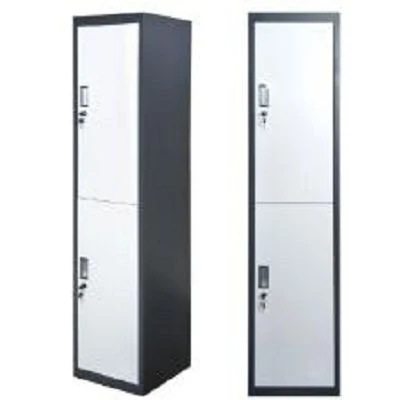
Long-term flexibility is the final big factor. Let’s say you’re buying a cabinet for a home office now, but you plan to hire a part-time assistant next year, or move to a slightly bigger apartment. Would a 2-drawer feel too small in a year? For most people, the 3-drawer has enough extra space to grow with you, without being overkill. But if you know you’re going to need even more space later, our range goes beyond 2 and 3 drawers too—we have options like the Narrow Four-door Cabinet, the Narrow Two-door Cabinet, the Narrow Three-door Cabinet, the Narrow Single-door Cabinet, and the Narrow Five-door Cabinet, all designed to fit the same slim footprint. Wait, let me clarify that last part: the naming can be a little confusing because we label them by door count to make it easier for people to pick. The door count lines up with the drawer count: a 2-door model has 2 drawers, a 3-door has 3, and so on. So if you start with a 2-drawer and realize you need more space down the line, you don’t have to replace your entire cabinet—some of our modular narrow cabinets can be stacked, which is a huge cost saver. I have a customer who’s been with us for 3 years: she started with a Narrow Two-door Cabinet for her freelance work, then added a Narrow Single-door Cabinet when she started hiring a few independent contractors, so she could store their 1099 docs in the extra stack. That modular option is something only a narrow supplier like us offers, because we design every unit to fit into tight spaces, even when stacked.
Wait, let’s circle back to a common mistake I see all the time: people focus only on width, but depth matters too. Most narrow filing cabinets are 18 inches deep, which fits standard letter-sized folders perfectly—no need to bend folders to make them fit. But some cheap narrow models are only 15 inches deep, which cuts off half an inch of space per folder, leading to bent papers and wasted space. Both our 2-drawer and 3-drawer units are 18 inches deep, so that’s a given, but it’s worth checking when you’re shopping, because it can make the same number of drawers hold way less.
Another angle: use cases. If you’re storing active files—meaning you pull them out once a week or more—the height of the drawer matters. Top drawers on both 2 and 3-drawer cabinets are usually the same height: around 10 inches, which is perfect for letter folders. Bottom drawers on 2-drawer models are around 15 inches, which can hold legal-sized folders if you need them. Bottom drawers on 3-drawer models are around 12 inches, which is still enough for standard letter, but you lose the legal option. So if you ever plan to store legal-sized papers (like contracts or large invoices), the 2-drawer might be better, because its bottom drawer is taller. That’s a detail most people don’t notice when they’re just looking at the number of drawers.
Let me pull this all together with real customer examples, because that’s what helps more than specs. Last quarter, we had two customers in the same small town, both needing narrow filing cabinets. The first was a freelance writer who worked from a 4x6 corner in her apartment. She only needed to store her 2021-2024 book contracts and a few client revisions. She picked a 2-drawer narrow cabinet because it fit perfectly under her desk, and she never has to reach up high to pull files. The second customer was a local part-time bookkeeper who handled taxes for 15 small businesses. She needed to store 7 years of tax records for each client, plus their monthly invoices. She picked the 3-drawer model because it had enough space for all that paper, and the three drawer sections let her sort records by year without mixing them up. Neither one regretted their choice, because they matched the cabinet to their exact needs, not just the number of drawers.
At the end of the day, the decision between a 2-drawer and 3-drawer narrow filing cabinet comes down to four questions: 1) How much paper do you need to store right now? If it’s less than 15 folders, and you need it to fit under a desk, go 2-drawer. If it’s 15 or more, and you have a little extra height, go 3-drawer. 2) Do you need to store sensitive documents that require locked drawers? Both have locks, but 3-drawer often has extra lockable sections, which is a plus for small businesses. 3) Do you plan to move or rearrange your office often? 2-drawer is lighter, easier to move alone. 4) Do you might need more space in a year or two? Our modular line—including models like the Narrow Four-door Cabinet, Narrow Five-door Cabinet, and the other options in our narrow range—lets you expand without replacing your entire unit, so you don’t have to guess right now.
If you’re still stuck, the best thing to do is measure your space first. Write down the exact width of the spot where you’ll put the cabinet (it should be at least 16 inches for most narrow models), the height available, and how many folders you currently have to store. If you have any leftover space, and you think you might outgrow a 2-drawer soon, the 3-drawer is the safer bet. But if your space is super tight, and you only need a little storage, don’t overbuy a 3-drawer just because you think it’s “bigger”—it’ll just take up space you don’t have.
As a supplier, I’m here to help with that. We’ve helped hundreds of customers pick the right narrow cabinet, no pressure to sell the more expensive model. Whether you’re a home office worker, a small retail owner, or a remote team lead, we’ve got units that fit every space and budget. If you have questions about specific models, need help measuring, or want to learn more about our modular options that let you add drawers later, feel free to reach out to our team for a custom consultation. We don’t just sell filing cabinets—we help people solve their space problems.
References
- Office Furniture Manufacturers Association. (2022). Space Optimization Guide for Small and Home Offices.
- National Association of Self-Employed. (2023). Document Storage Best Practices for Freelancers and Small Businesses.
- Occupational Safety and Health Administration (OSHA). (2021). Office Ergonomics: Choosing and Using Filing Cabinets.
- Steelcase Workplace Insights. (2022). Narrow Storage Solutions for Tight Commercial and Residential Spaces.