If you’ve ever driven past a quiet commercial district after dark, you might have seen a plain, unmarked truck idling at the back of a bank, retail chain, or ATM hub, then watched a pair of uniformed agents load heavy, locked containers into the rear before disappearing into the night. What you didn’t see is the carefully orchestrated system that happens before, during, and after those hours—a system centered on cash vaults: the secure, unseen backbone of night operations for financial institutions, retailers, and cash-in-transit (CIT) providers. As a cash vault supplier that’s worked with dozens of clients across North America over the past 12 years, I’ve walked more teams through the ins and outs of nighttime vault workflows than I can count, and one thing stands out most: these vaults aren’t just reinforced boxes sitting in a basement. They’re dynamic, purpose-built hubs designed to turn the chaos of after-hours cash handling into a process that’s both fast and airtight. Let’s break down how it all works, step by step, from pre-shift prep to the moment the last security guard locks the vault door at dawn.
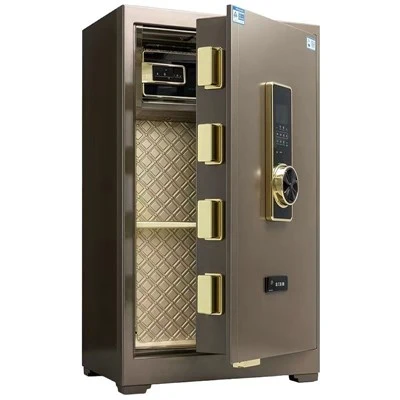
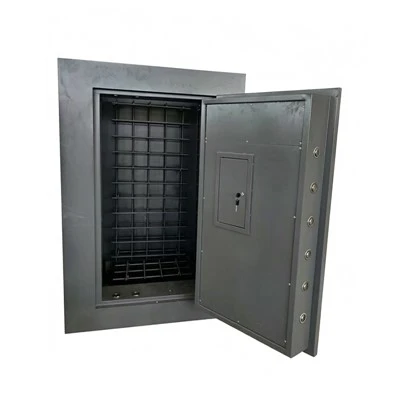
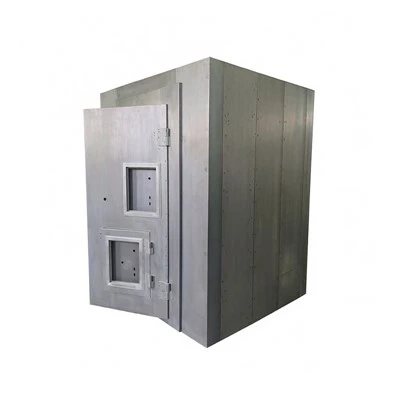
First, you have to start with the vault itself, because not all night operations use the same setup. When I first got in this business, clients often asked if a standard safe would work for after-hours use, and the answer is almost always no. Nighttime vault operations need two key things: rapid access for CIT teams and near-impenetrable security for cash in transit and storage. That’s why we build two core solutions tailored to those needs. The first is modular bank vaults, which are ideal for operations that need flexibility—like small regional banks expanding their after-hours cash services, or retail chains adding new locations. Unlike fixed vaults that are poured directly into a building’s structure, modular vaults are prefabricated in our factory, tested to meet international security standards (like UL 1212 for cash handling) in advance, and installed in a matter of days, not weeks. They come with removable, heavy-duty access panels that line up with CIT loading docks, so teams don’t have to navigate through a bank’s lobby or office space after hours. That cuts down on time spent moving cash, which reduces risk of human error and security gaps. For larger institutions or locations with permanent, high-volume nighttime operations, fixed bank vaults are the standard. These are monolithic structures, poured from reinforced concrete, lined with steel plates, and anchored deep into a building’s foundation—too heavy to move, and impossible to breach without specialized tools and explosive entry (which triggers immediate alerts). We’ve installed fixed vaults in downtown banks that handle $20 million in nightly cash deliveries, and their design includes separate “drop zones” where CIT teams can deposit cash without ever entering the main vault storage area, a feature that’s non-negotiable for night operations.
Once the vault is in place, the night shift workflow begins long before the sun sets on the building it’s housed in. Every night, before closing, the vault’s operations manager holds a 15-minute handoff meeting with the daytime team, and it’s one of the most underrated parts of the process. Daytime staff (tellers, retail cash managers, ATM technicians) log all cash that needs to go into the vault for after-hours storage, count batches of checks to be processed, and note any urgent requests—like a regional grocery chain that needs restocked ATMs first thing in the morning, or a local credit union that has a large loan disbursement waiting for a customer at 8 a.m. Those details are typed into a secure, proprietary inventory system we provide to all our clients, and the entry is cross-checked twice by two different daytime employees. That’s a rule we enforce on every job: no cash moves to the vault without two sets of eyes verifying its count. At this point, the vault itself is set to a “secured standby” mode: the main door is locked, and only two senior night team members hold separate, non-overlapping access codes. That’s another non-negotiable for night operations, because it prevents a single person from accessing the entire vault alone. I’ve heard horror stories from clients who skipped this step in the early days of their vault operations—one small bank I worked with a few years back had a part-time security guard who had the full access code, and he was caught skimming cash from the vault’s drop zone on weekends. After we revised their access policy to split codes between two shifts, that problem never came back.
As the clock hits 10 p.m., CIT teams begin arriving to pick up cash and deliver new deposits. This is where the modular or fixed vault’s design really shines. Let’s take the modular bank vault I mentioned earlier, installed at a regional credit union in Ohio that serves 12 small towns. The credit union’s vault has a dedicated CIT drop door that sits a few feet from a lighted, fenced delivery area, so drivers never have to leave their truck’s line of sight. Each CIT agent carries a biometric key fob—their fingerprint is the only way to unlock the drop door—and they can only access the designated drop zone, not the main vault storage. That means even if an agent’s fob is stolen, they can’t get to the $1.2 million in cash the credit union stores overnight. For fixed vaults, the process is similar, but the delivery zone is often connected to the vault via a short, reinforced hallway with motion sensors and glass panels that alert security if anyone approaches. In both cases, every item that’s moved between the CIT truck and the vault is scanned with a unique barcode, which links it to the inventory log the daytime team prepared. That means by the time the last CIT truck pulls away, the night vault team already has a real-time count of every bill, coin, and check that’s been deposited or taken for processing. I always tell new clients that this barcode step is what turns a cash vault into a trustworthy system—without it, you’re just guessing how much cash is in there, which leads to discrepancies, lost time, and more security risk.
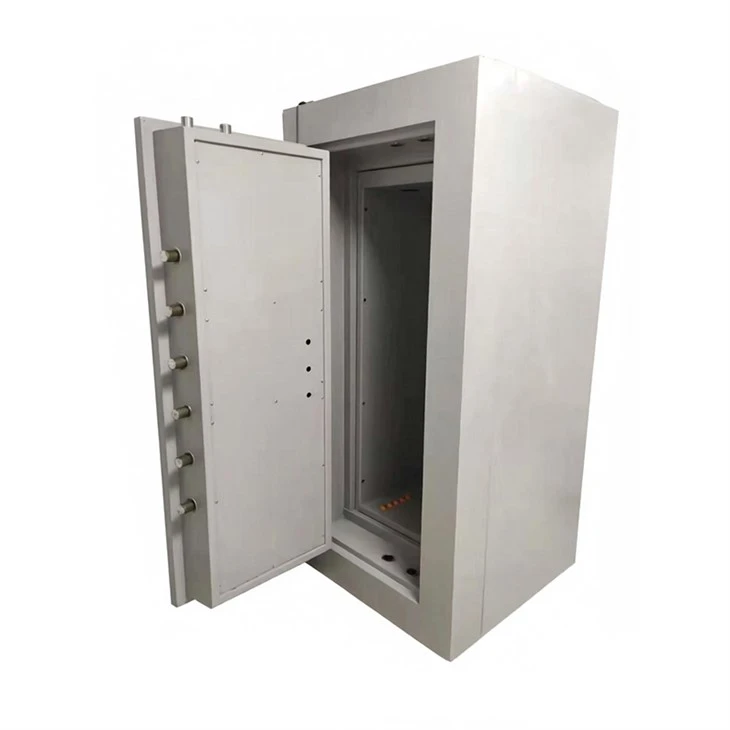
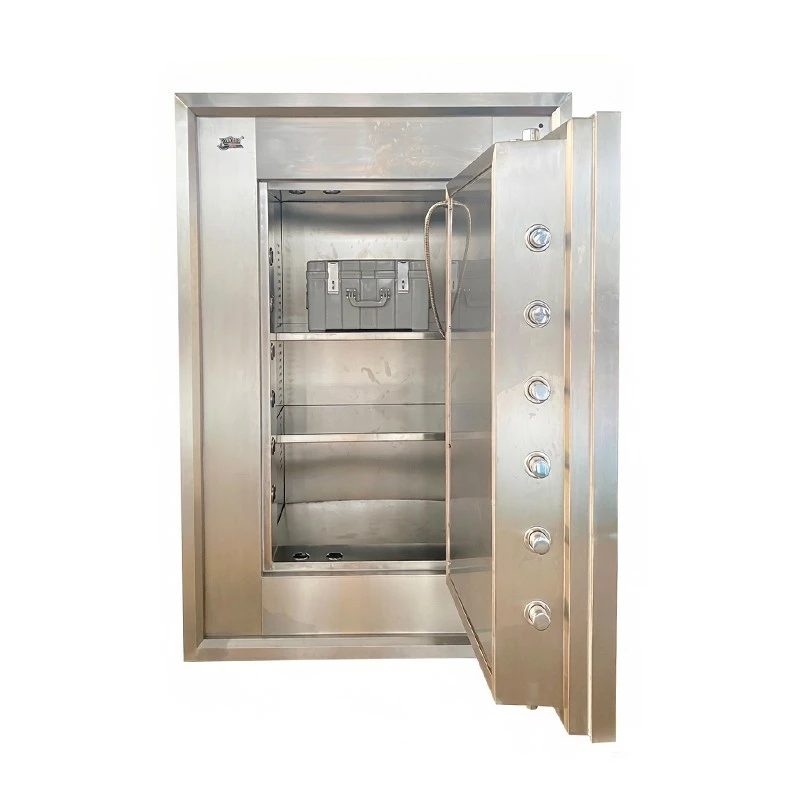
Once the CIT teams leave, the next phase of night operations is processing the cash and balancing the vault. This is where the vault’s internal sorting and counting equipment comes into play, another feature we integrate into every vault we supply, whether it’s modular or fixed. For small clients like the Ohio credit union, we install compact, high-speed sorters that can count 1,200 bills per minute and detect counterfeits with 99.9% accuracy. For larger operations, like a national retail chain’s central vault, we work with partners to install industrial sorters that handle 10,000 bills per hour, plus separate machines for counting coins and sorting checks by region. During this part of the shift, the lights in the vault are dimmed to conserve energy, and security cameras switch to night vision mode—all of which is monitored by a remote security team at a 24/7 control center we partner with. Every few minutes, a guard will walk through the vault’s checkpoints, which are spaced every 20 feet, and log their presence via a small touchscreen. That’s a final layer of defense: if a guard misses a checkpoint or doesn’t check in at the required time, the control center sends an immediate alert.
Balancing the vault is the last critical step before the night shift ends, and it has to be done perfectly. By 5 a.m., when most night operations start winding down, the vault’s operations manager pulls two separate reports: one from the daytime team, and one from the sorting and counting system. The two numbers are cross-checked line by line—every batch of bills, every roll of coins, every bundle of checks has to match. If there’s even a $5 discrepancy, the team doesn’t leave until they find it. I’ve seen teams spend an hour sorting through a single batch of coins to find a mismatched roll, because even small errors can lead to big problems later: a ATM being shorted on cash, a bank’s daily ledger being off, or even a compliance audit flag. Once the numbers match, the vault is set to its final secured mode: all access codes are reset, the drop doors are locked, and the main vault door is sealed with a tamper-evident seal that breaks if anyone tries to open it without the correct code.
After 12 years in this business, the most common question I get from clients is: “Why can’t we just use a standard safe in the basement?” The answer boils down to scale, security, and speed. A standard safe might hold a few thousand dollars, but a cash vault for night operations has to handle hundreds of thousands or millions. It has to let CIT teams come and go quickly without exposing the rest of the building to risk. It has to have redundant security systems so if one alarm fails, another takes over. That’s why modular and fixed vaults aren’t just products—they’re custom-built systems, tailored to each client’s unique night operation needs.
If you’re a business owner, CIT manager, or bank operations lead looking to upgrade your night vault setup, or if you’re just curious about how these systems work, we’re here to walk you through every step. Whether you need a flexible modular bank vault for a growing regional operation or a heavy-duty fixed bank vault for a high-volume central hub, we can design and install a solution that fits your needs and your budget.
References
- Underwriters Laboratories. (2021). Standard for Security Cash Handling and Storage Equipment, UL 1212.
- Federal Reserve Bank of New York. (2022). Cash Inventory and Night Operations Best Practices for Financial Institutions.
- Cash Management Association. (2023). Global Standards for Modular and Fixed Bank Vault Security Design.
- International Cash Services Association. (2022). Nighttime Cash-in-Transit Safety Protocols and Workflow Standards.