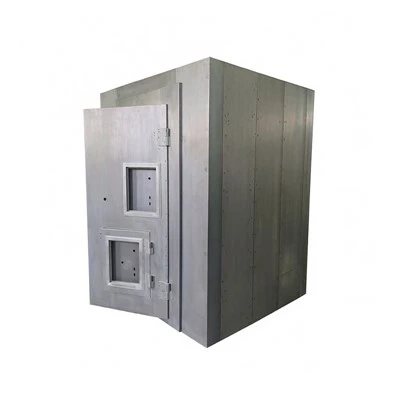
If you’re a business owner, office manager, or even a remote worker setting up a home office, you’ve probably wondered at some point: “What size commercial security safe fits under a desk?” I get it—on one hand, you need to keep sensitive stuff (client files, cash, high-value electronics, key contracts) locked up tight. On the other hand, no one wants a bulky, eye-sore safe eating up half their desk space or sticking out so far it’s a trip hazard.
As a Commercial Security Safe supplier, I’ve fielded this question a hundred times, and the short answer is: there’s no one-size-fits-all. But there’s a way to figure out exactly what size works for your space and your needs without overspending or cramming something that doesn’t belong. Let’s break this down like we’re chatting over coffee—not a stuffy industry manual.
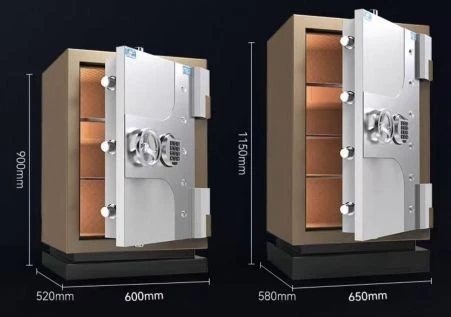
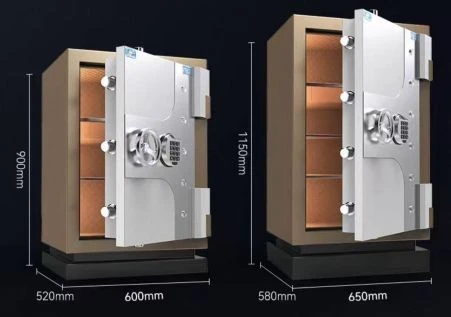
First, let’s talk about the obvious constraint: under-desk space. Most standard office desks (whether they’re the standard 60-inch wide, 30-inch deep traditional kind or the more compact 48-inch wide “home office” models) have a pretty predictable amount of clearance. Wait, but “under a desk” can mean different things. Are we talking about the area directly under the main work surface, between the legs? Or is there a little extra space next to the desk frame if it’s a corner unit? A quick tip: measure your desk first before you even browse safes. Grab a tape measure, jot down three key numbers:
- Height clearance from the floor to the bottom of the desk’s surface (most range from 28 to 30 inches, but some standing desks can go up to 48 inches—though you won’t want to store a heavy safe under a standing desk that’s adjusted up).
- Width of the gap between the desk’s legs (or walls, if you’re tucking it in a corner).
- Depth of the space—how far back it goes from the front edge of the desk to the wall behind it.
If you skip this step, you might fall in love with a sleek safe only to realize it’s 32 inches tall and your desk only has 29 inches of clearance. Don’t be that person. I’ve seen it happen way too often: a small business buys a safe, gets it delivered, and can’t even slide it under the desk because they didn’t measure.
Now, once you’ve got your space numbers, let’s match that to what you’re actually storing. A safe is useless if it’s too small to hold your stuff, right? Let’s go through common under-desk use cases and the size of safe you’ll need:
If you’re storing small, daily items: think petty cash, USB drives with client data, a few key contracts, or extra company credit cards. You don’t need anything huge here. Most of these fall into the “mini” or “compact” under-desk safe category—usually 10 to 15 inches tall, 12 to 18 inches wide, and 10 to 14 inches deep. These are super easy to slide under a desk, don’t block your legs, and are light enough to move if you rearrange your office later. A lot of folks go for an Electronic Safe Box here because they’re quick to access when you’re grabbing cash mid-day, and they fit perfectly in tight under-desk nooks. I’d warn against skimping on security for these, though—make sure it’s rated for commercial use, not just a flimsy home safe from a big-box store.
If you’re storing medium-sized items: maybe you have a few high-value laptops, a stack of client files, or a small amount of valuable inventory (like premium gift cards or product samples for a small business). For this, you’ll want something a little roomier—18 to 24 inches tall, 15 to 20 inches wide, and 12 to 18 inches deep. These are still small enough to slide under a standard desk, but they give you enough space to not cram items so tight you can’t close the door. Some people opt for a Mechanical Combination Safe here if you don’t want to deal with batteries dying on an electronic safe mid-day—no need to worry about replacing batteries, just turn the dial, and you’re good to go. They’re a little more heavy-duty than small electronic boxes, too, so they can hold up to jostling if you move the safe around a bit.
Wait, but what about fire protection? Oh right, that’s a big one I almost forgot. A lot of office workers don’t realize that regular safes can’t stand up to a house or office fire. If you’re storing important documents that you can’t replace—like tax records, legal contracts, or original client agreements—you’ll want a safe that’s fire-rated. The Fireproof Security Safe line we carry, for example, has models that are still compact enough to fit under a desk, but they can withstand hours of high heat without letting smoke or water damage get inside. Just note that fireproof safes tend to be a little thicker (they need insulation on the inside to keep temperatures low), so you’ll want to knock an inch or two off your depth measurement when picking one out. No sense in getting a fireproof safe only to find it sticks out 6 inches from your desk.
Now, let’s talk about a few common mistakes people make when sizing a safe under a desk. First, they forget about the door swing. A safe’s door takes up extra space when it’s open—like, a lot of extra space. If you have a desk tucked right up against a wall, and the safe’s door swings to the right, you might not be able to open it all the way because it’s hitting the wall. That’s a problem when you’re grabbing a file in a hurry. Always check the door swing direction of the safe you’re looking at, and leave an extra 6 to 10 inches of clearance on the side the door opens to. Some safes have reversible doors, which is a lifesaver for tight under-desk spots—you can switch which way it opens to fit your space.
Second, they don’t consider weight. Commercial security safes aren’t like those little plastic home safes you can pick up with one hand. A 1 cubic foot under-desk safe can weigh 50 to 80 pounds, and a 2 cubic foot model can be 100 to 150 pounds. That’s heavy. If you’re planning on sliding it under a desk on a regular basis, you’ll want a safe with built-in handles or wheels—some of our Commercial Security Safe models come with recessed handles so you can slide it in and out easily without straining your back. And never try to move a loaded safe alone. Even if it’s “light” for its size, all the stuff inside adds to the weight, and you can throw out your back or drop it, damaging the safe or your floor.
Third, they overbuy. I get it—you want to have extra space “just in case,” but a safe that’s too big will stick out under your desk, get in the way when you’re working, and take up space you could use for a printer, a file tray, or just your feet. For most small to medium offices, a 1.2 to 1.8 cubic foot safe is perfect for under a desk. If you need more space than that, you might want to look at a larger safe that goes next to your desk instead of under it—no shame in that, not every space is made for an under-desk safe.
Let’s talk about specific examples, because numbers help. I recently helped a local graphic design shop pick out a safe for their under-desk space. Their desk was 5 feet wide, with a gap between the legs of 18 inches, 29 inches of height clearance, and 16 inches of depth. They needed to store client design files (which are paper, so fireproof was a must) and a few high-end graphic tablets. We went with a compact Fireproof Security Safe that was 16 inches tall, 15 inches wide, and 14 inches deep. It fit perfectly under their desk, had a reversible door, and was light enough (for a safe) to slide out when they needed to grab something. They loved it because it didn’t take over their workspace, and their files were safe from fires and theft.
Another client was a real estate agent who needed a safe for her home office desk. She mostly stored petty cash, key fobs for property showings, and a few printed client contracts. She went with an Electronic Safe Box that was 12 inches tall, 14 inches wide, and 11 inches deep. It fit under her small home office desk, was quick to access when she was heading to show a property, and didn’t take up extra space. She said it was exactly what she needed, no extra bulk.
Wait, what about fingerprint safes? A lot of people ask about those, and honestly, they’re great for under-desk use because they’re so fast. The Fingerprint Security Safe we carry lets you program up to 10 different fingerprints, so you and your team can access it without fumbling with keys or combinations. No one forgets a code, no one loses a key—just tap your finger, and it opens. Just make sure the fingerprint sensor is durable, because under-desk safes can get knocked around a bit. All our fingerprint safes are tested to withstand daily use, so they work even if you have oily fingers or a little dust on the sensor.
Now, let’s talk about security ratings, because not all under-desk safes are created equal. When you’re buying a commercial safe, don’t just go by the size—look for a UL rating or another independent security certification. UL rates safes for burglar resistance (how long they can stand up to tools like drills, pry bars, and bolt cutters) and fire resistance. A lot of cheap “under-desk safes” don’t have any security rating, which means a thief could break into them in 10 seconds flat. All the safes we carry—whether it’s an Electronic Safe Box or a heavy-duty Commercial Security Safe—have independent security ratings, so you know your stuff is actually safe.
Another tip: if you’re renting your office space, make sure the safe is easy to remove if you move. A lot of commercial safes are designed to be bolted to the floor or the desk frame, which is great for security, but you don’t want to damage the floor when you move out. Look for safes that have optional mounting hardware that’s easy to install and remove, or ones that are light enough (with wheels) to move without needing to be bolted. I’d recommend avoiding super heavy safes if you’re in a rented space—you don’t want to get charged for floor damage when you move.
Let’s wrap this up with a quick checklist you can take with you when you’re shopping for your under-desk safe:
- Measure your desk: note height clearance, gap width, and depth clearance (leave 6-10 inches for door swing).
- List what you’re storing: small items (cash, keys) = compact safe; medium items (laptops, files) = roomier safe; important paper docs = fireproof safe.
- Pick a security type: fingerprint for quick access, mechanical for no batteries, electronic for easy use.
- Check weight and mobility: get a safe with handles or wheels if you need to slide it under the desk, and make sure it’s not too heavy to move alone.
- Look for certifications: always buy a commercial safe with a security rating, not a cheap generic.
At the end of the day, the best under-desk safe is the one that fits your space, holds what you need to store, and doesn’t get in the way of your work. If you’re still unsure what size is right for you, feel free to reach out—we’re a commercial security safe supplier that knows these products inside and out, and we can help you find the perfect fit for your office (or home office). No pushy sales stuff, just straight-up advice based on what works for other small businesses and professionals.
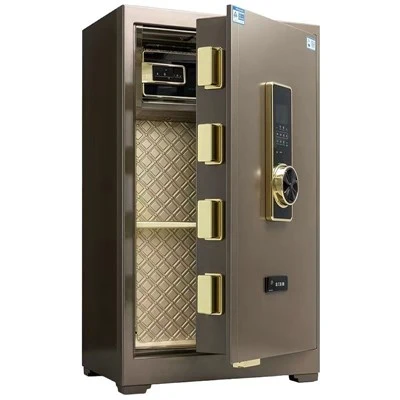
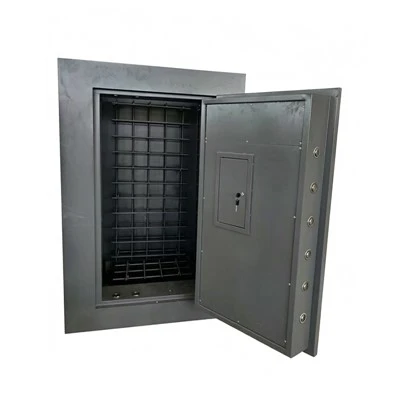
You can check out our full line of under-desk safes online, including the compact Fingerprint Security Safe, reliable Mechanical Combination Safe, convenient Electronic Safe Box, heavy-duty Commercial Security Safe, and fire-resistant Fireproof Security Safe to find exactly what you need.
References:
- National Fire Protection Association. (2022). Fire Resistance Testing for Office Safes. NFPA 80: Standard for Fire Doors and Other Opening Protectives.
- Underwriters Laboratories. (2023). UL 1037 Standard for Anti-Theft Safes and Vault Doors.
- Small Business Administration. (2021). Office Security Best Practices for Small Businesses. SBA Office of Disaster Assistance.
- Occupational Safety and Health Administration. (2022). Ergonomic Tips for Office Workspaces. OSHA Workplace Safety Series.